Sponsored by Dryello. Read the disclosure. Last reviewed September 30, 2026.
Quick answer
Smelly cleats and sweaty feet in youth flag football are usually a sweat-and-bacteria problem, not athlete's foot. Keep cleats airing out of the bag, pull the insoles, rotate pairs when you can, and put kids in moisture-wicking socks they change after every practice. For older kids and teens with unbroken skin, a foot antiperspirant can reduce how much they sweat inside cleats. Athlete's foot is a separate fungal infection — itchy, peeling, or cracked skin between the toes — and that needs an OTC antifungal such as tolnaftate, not an antiperspirant. Our sponsored pick for sweat is Dryello Foot Antiperspirant For Him; our sponsored pick when there is an active infection is Dryello's tolnaftate Athlete's Foot Treatment Stick. For a full treatment guide, see our parent's guide to athlete's foot in youth flag football.
Key takeaways
- Smelly cleats usually mean sweat plus odor-causing bacteria. That is not the same thing as athlete's foot.
- Get cleats out of the bag the day of practice. Pull insoles. Rotate pairs when your athlete plays several times a week (AAD).
- Moisture-wicking socks beat cotton for keeping feet drier (HealthyChildren.org). Change them after every session.
- A foot antiperspirant reduces sweat on unbroken skin. It does not treat a fungal infection, and Dryello's label says not to use it on broken skin.
- Itchy, peeling, or cracked skin between the toes needs an antifungal such as tolnaftate — see our athlete's foot parents guide.
- Dryello is featured first because it sponsors this guide. We did not test any product.
Smelly cleats vs athlete's foot: how parents can tell
Flag football means a lot of time in cleats: weeknight practices, weekend games, sometimes three or four tournament games in a day. Feet sweat. Socks stay damp. Cleats go into a closed bag and sit in a warm car. That environment breeds odor-causing bacteria even when the skin is perfectly healthy.
Athlete's foot is different. It is a fungal skin infection. HealthyChildren.org describes it as a red, scaly, cracked rash between the toes that itches and burns. MedlinePlus adds cracked, flaking, or peeling skin between the toes or on the side of the foot. If your athlete's main complaint is smell and damp socks with healthy skin, start with drying habits and, for older kids, a foot antiperspirant. If there is a rash between the toes, treat the infection — do not just mask the smell.
| What you notice | Most likely | What usually helps |
|---|---|---|
| Smelly cleats and damp socks, healthy skin | Sweat plus odor-causing bacteria | Dry cleats, fresh socks, foot antiperspirant for older kids with unbroken skin |
| Itchy, peeling, or cracked skin between the toes | Likely athlete's foot (mainly teens) | OTC antifungal twice daily; dry feet; fresh socks |
| A foot rash in a child under 10 | Usually something else (HealthyChildren.org) | Call the pediatrician before treating |
| Spreading redness, pus, a red line up the leg, or fever | Possible bacterial infection | Call the doctor now (HealthyChildren.org) |
Age still matters. HealthyChildren.org says athlete's foot is mainly a teen problem, and that before age 10 a foot rash is usually something else. For younger players with a rash, check with the pediatrician before buying an antifungal or assuming it is athlete's foot.
Why youth flag football cleats get so smelly
Cleats are closed shoes designed for traction, not airflow. After a practice on turf or grass, they hold heat and moisture against the sock. Zip them into a sports bag and the moisture has nowhere to go. Bacteria that live on skin break down sweat and produce the smell parents notice when they open the bag in the garage.
That smell is unpleasant, but it is not proof of athlete's foot. MedlinePlus lists sweating a lot and keeping feet wet for long periods as risk factors for the fungal infection, because the fungus grows best on warm, damp skin. So the same wet-cleat habit that creates odor also makes an infection more likely if the fungus is picked up from a locker room floor, shared towel, or damp shower (AAD, CDC). Fixing the drying routine helps both problems.
Tournament days make it worse. Three games means three cycles of sweat with little chance to air feet out. Packing dry socks and changing between games is the single highest-leverage habit most flag families skip.
The cleat-and-sock drying routine that actually works
None of this requires special products. It requires doing the same few steps every practice day.
Cleats
- Get cleats out of the bag as soon as you are home. A closed bag in a warm car is the worst place for them.
- Pull the insoles so both the insole and the inside of the cleat can air-dry.
- If your athlete plays several times a week, a second pair of cleats or turf shoes lets each pair dry fully between wears. The AAD recommends alternating shoes for exactly this reason.
- Do not share cleats with siblings or teammates while anyone has a rash.
Socks
- Choose socks labeled moisture-wicking. HealthyChildren.org says socks made of man-made fibers keep feet drier and cooler than cotton.
- Change socks after every practice and game, and pack a spare pair for tournament days.
- Keep a zip bag for wet socks so they do not sit against clean gear in the sports bag.
Locker rooms and showers
- Pack slides for locker rooms, team showers, and hotel bathrooms on travel weekends (AAD).
- Give your athlete their own towel. After showering, dry completely between the toes before socks go on.
The products we recommend first
These are sponsored recommendations. Dryello paid for this placement, and we are telling you so up front. What follows sticks to what each product's FDA-listed label and the maker's website say. We have not tested these products ourselves.
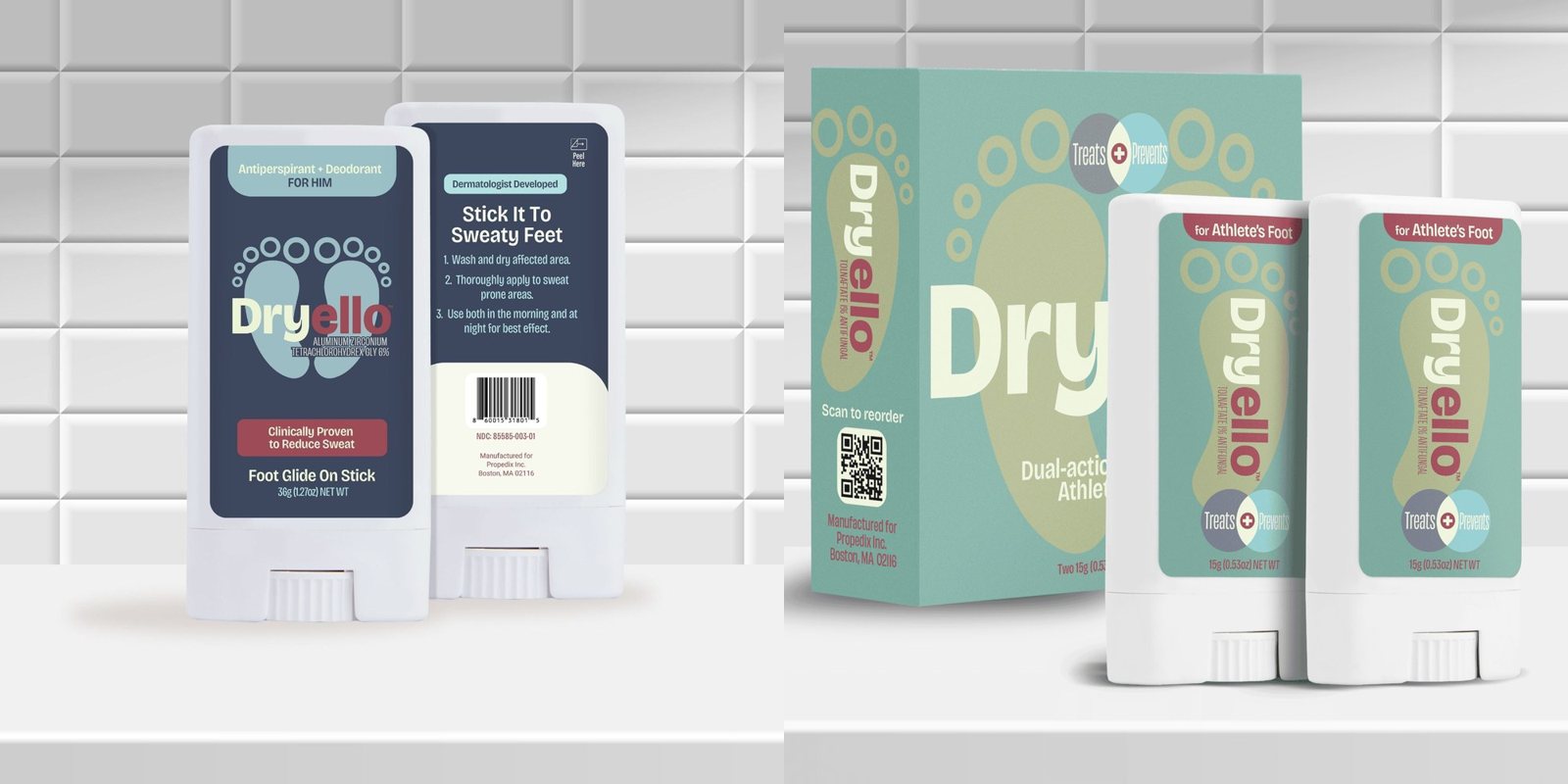
For sweaty, smelly feet first: Dryello Antiperspirant Deodorant Foot Glide-On Stick, For Him
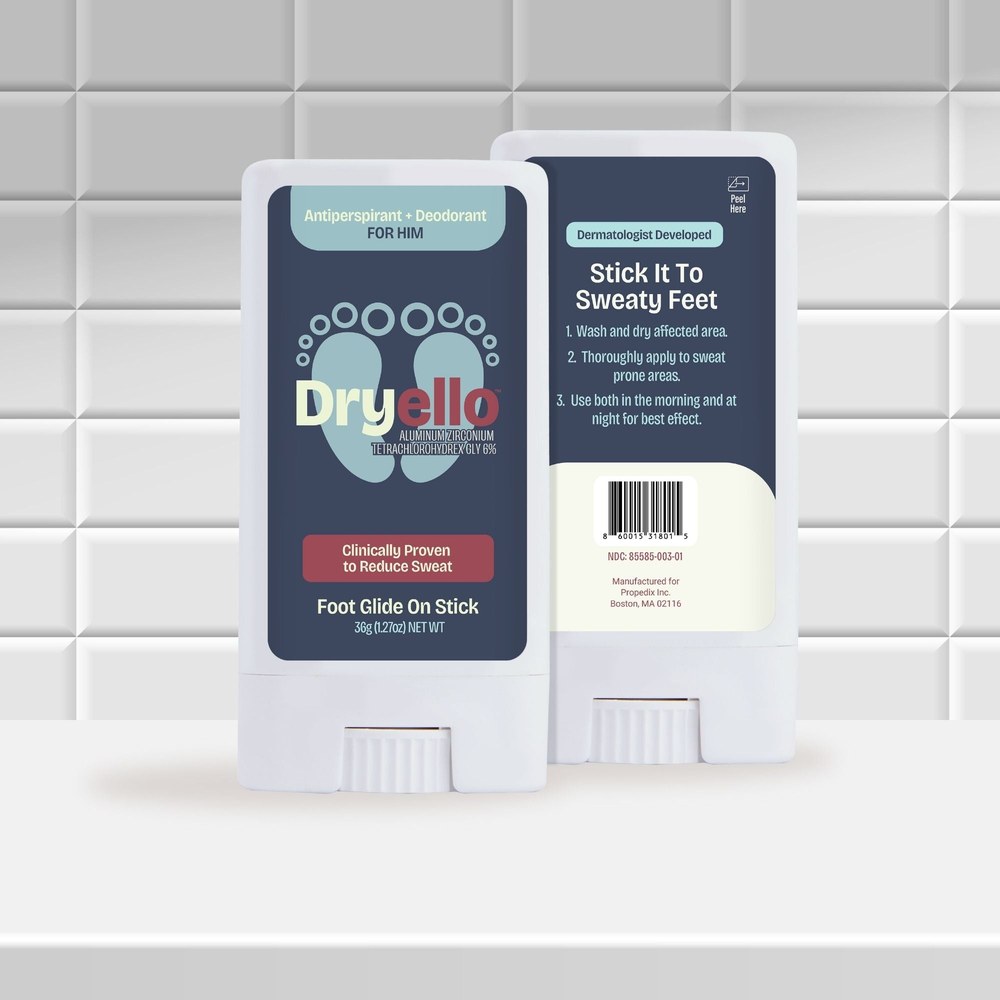
Dryello Foot Antiperspirant, For Him (sponsored)
- Drug Facts label on DailyMed: aluminum zirconium tetrachlorohydrex gly 6%, purpose antiperspirant, use "reduces sweat."
- Directions: wash and dry the area, then apply with numerous broad strokes, including in crevices.
- Solid glide-on stick made for feet. Dryello says it goes on dry, so socks go right on — useful in a parking lot before cleats lace up.
- Warnings: not for broken skin; stop if a rash or irritation occurs; ask a doctor first if you have kidney disease.
- Listed at $14.50 and in stock on dryello.com on September 25, 2026.
Best for: Older kids and teens whose cleats smell and whose socks are soaked by halftime, with unbroken skin and no active rash between the toes.
See For Him at dryello.comThere is also a For Her version with the same active ingredient and label. It showed as sold out on dryello.com when we checked on September 25, 2026. Check For Her availability at dryello.com. Both versions are scented; inactive ingredients include orange peel oil, so they may not suit fragrance-sensitive skin.
Mom's Magazine's guide to sweaty, smelly feet in tween and teen athletes covers the antiperspirant side for a broader sports audience. EmergencyRefs has a parallel routine for officials on referee foot care through long tournament days.
Only when there is an infection: Dryello Athlete's Foot Treatment Stick
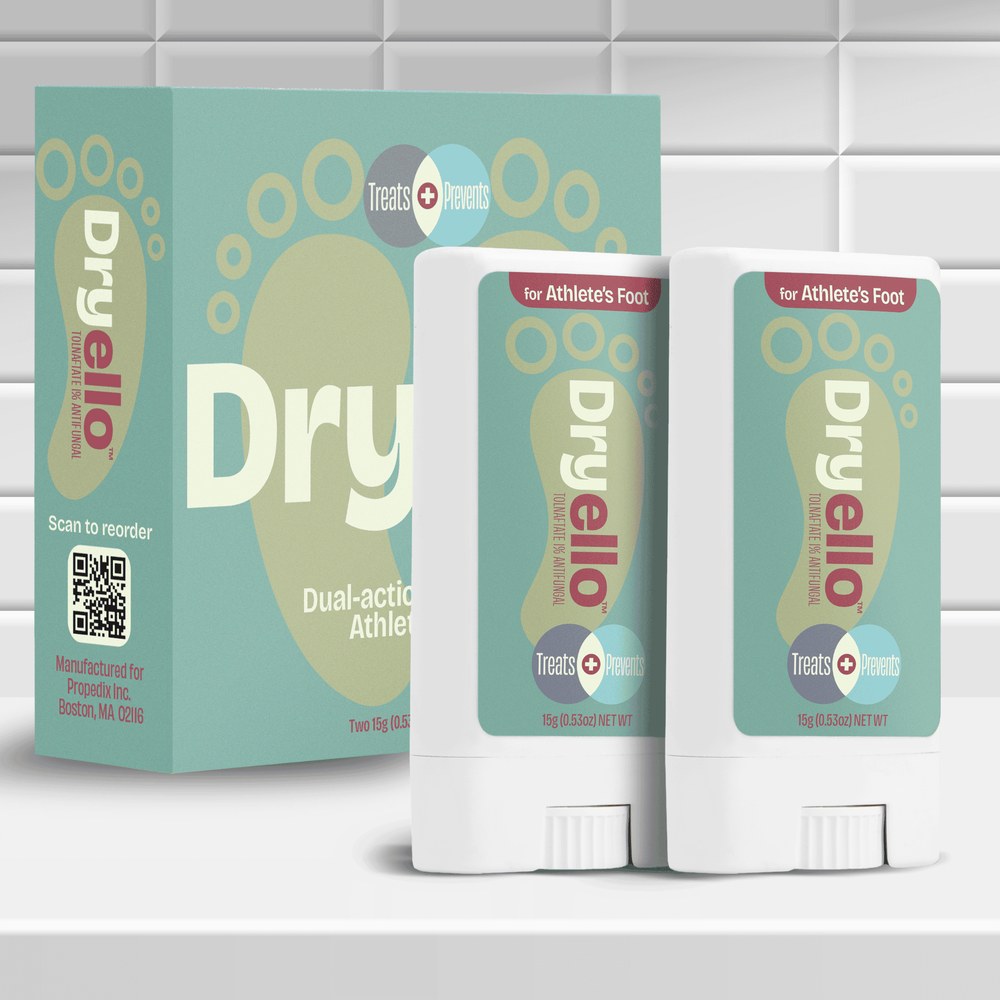
Dryello Athlete's Foot Treatment Stick (sponsored)
- Drug Facts label on DailyMed: tolnaftate 1% antifungal, the same active ingredient as Tinactin.
- Label uses: cures most athlete's foot; relieves itching, burning, cracking, and scaling; prevents recurrence of most athlete's foot with daily use.
- Label directions: wash and dry feet thoroughly, apply a thin layer twice daily (morning and night), supervise children, pay special attention to the spaces between the toes, and change shoes and socks at least once daily.
- Label warning: do not use on children under 2 unless directed by a doctor. Stop and consult a doctor if irritation occurs.
- A dry glide-on stick, so there is no cream on hands. Dryello's site recommends twice daily for 4 weeks.
- Listed at $16.95 for a pack of two 15 g sticks on dryello.com on September 25, 2026.
Best for: Teen flag players who already have itching or peeling between the toes, or who keep getting athlete's foot back during the season. Full detail is in our athlete's foot parents guide.
See the stick at dryello.com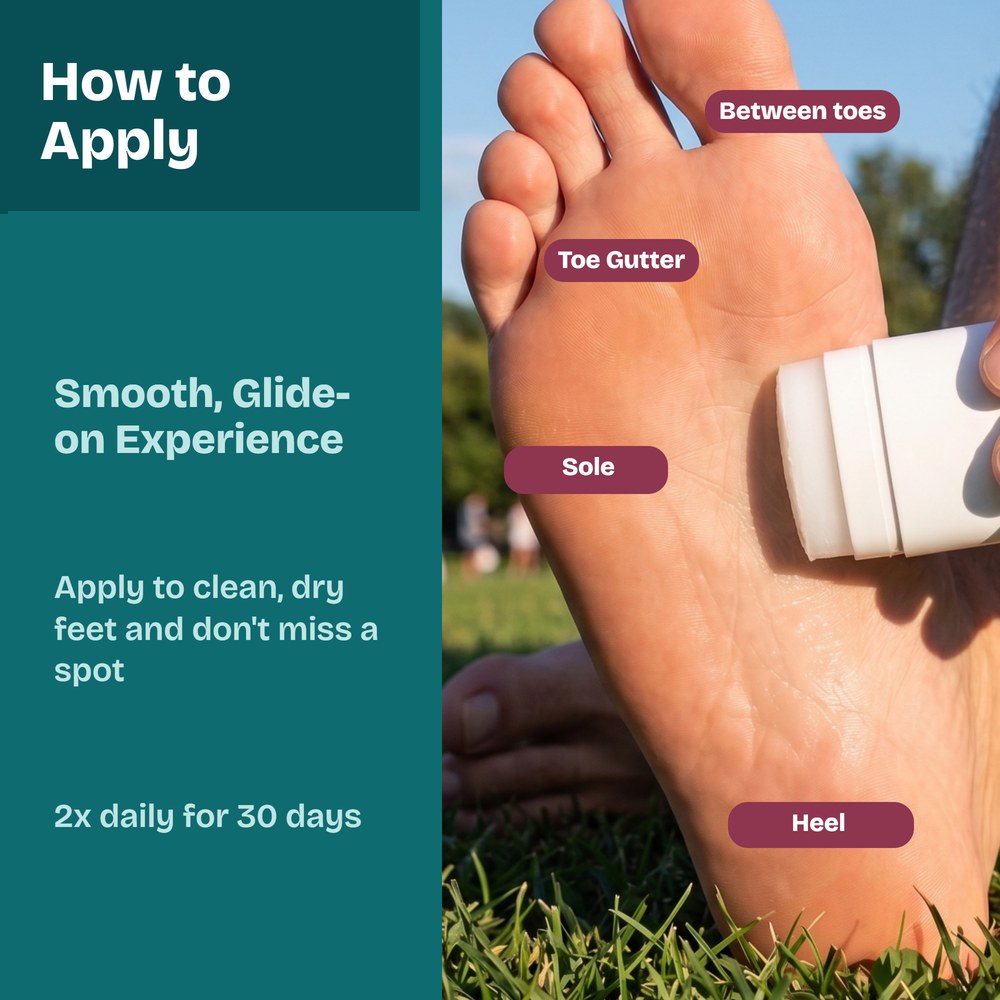
Should my flag athlete use a foot antiperspirant or an antifungal?
Use a foot antiperspirant for sweat and odor on clean, unbroken skin. Use an antifungal such as tolnaftate if there is itching, peeling, or cracking between the toes. An antiperspirant does not treat a fungal infection. Dryello's antiperspirant label says not to use it on broken skin.
Neither Dryello label addresses using the two products together, so ask a pharmacist or your child's doctor if you want to combine them. A sensible approach is to treat any infection first, then add an antiperspirant to healthy, unbroken skin once the rash has cleared, if sweat is still soaking the socks on practice nights.
Do sweaty feet cause athlete's foot?
Sweat does not cause the infection by itself. The fungus has to be picked up, usually from damp floors or shared towels and shoes. But once it is there, it grows best on warm, damp skin. MedlinePlus lists sweating a lot and keeping feet wet for long periods as risk factors, so drier feet make a real difference. The AAD says to keep your feet dry even if you have not gone barefoot in public areas, because the fungus thrives inside hot, sweaty shoes.
Can kids keep playing flag football with sweaty feet or athlete's foot?
Sweaty feet alone are not a reason to sit out. For athlete's foot, HealthyChildren.org is direct: children with athlete's foot do not need to miss school, and they may take gym and play sports. What changes is the routine — treat twice a day as the label directs, pack dry socks, keep towels and cleats to themselves, and wear slides in locker rooms.
When should you call the doctor?
HealthyChildren.org lists these reasons to contact your child's doctor:
- Fever with spreading redness, or a red line going up the leg: seek care now.
- The rash looks infected, drains pus, or the foot is very painful: within 24 hours.
- Your child is under 10, the rash spreads to the top of the foot, it is not better after 1 week of treatment, or it is not gone after 2 weeks: during office hours.
Also check with the doctor before self-treating if your child has diabetes or a condition that weakens the immune system. For foot antiperspirants, Dryello's label says to ask a doctor first if you have kidney disease.
Sources
- HealthyChildren.org, American Academy of Pediatrics. Athlete's Foot symptom checker. Accessed September 30, 2026.
- DailyMed, U.S. National Library of Medicine. Dryello Antiperspirant Deodorant Foot Glide-On Stick drug label. Accessed September 30, 2026.
- DailyMed, U.S. National Library of Medicine. Dryello Athlete's Foot Treatment Stick (tolnaftate 1%) drug label. Accessed September 30, 2026.
- American Academy of Dermatology. How to prevent athlete's foot. Accessed September 30, 2026.
- American Academy of Dermatology. Hyperhidrosis: tips dermatologists give their patients. Accessed September 30, 2026.
- MedlinePlus, U.S. National Library of Medicine. Athlete's foot (Medical Encyclopedia). Accessed September 30, 2026.
- Centers for Disease Control and Prevention. Causes of ringworm (including athlete's foot). Accessed September 30, 2026.
Sponsorship disclosure
This article is sponsored by Dryello, a foot-care brand made by ProPedix, Inc. Dryello is a paying client of Flag Training Football, and Dryello paid for this placement. That is why Dryello products are recommended first on this page. Links to dryello.com include tracking parameters so Dryello can see visits from this page.
We did not lab-test, wear-test, or clinically evaluate any product on this page, and we do not publish reviews or ratings we did not collect. Product details come from each product's FDA-listed Drug Facts label on DailyMed or the manufacturer's own website, and prices come from dryello.com on the date stated. Other brands may appear for comparison only; none of them paid to appear and we have no relationship with them.
This article is general information, not medical advice. Always read and follow the product label. Talk to a doctor, podiatrist, or pharmacist about any foot problem that is not improving, and before treating your feet yourself if you have diabetes, poor circulation, or a weakened immune system.